Female Sex Tourism in Bali: Kuta Cowboys, Legal Risks, and What Travel Guides Never Say
Bali hosts a well-documented but rarely discussed female sex tourism scene centred on "Kuta Cowboys" — local men who form paid romantic arrangements with foreign women. This guide covers the legal exposure for tourists, HIV and health risks, economic dynamics, police raid history, and why mainstream travel content avoids the subject entirely.
By Larry Timothy • 14 April 2026 • 10 min read
- Female sex tourism in Bali is an established phenomenon centred on "Kuta Cowboys" — local Balinese men who develop paid or financially-maintained romantic relationships with foreign female tourists.
- Both parties face legal exposure under Indonesia's Pornography Law (Law No. 44/2008) and Criminal Code (KUHP), which criminalise commercial sexual services. Enforcement is irregular but real — police raids on Kuta nightlife areas have resulted in detentions of both local workers and foreign women.
- HIV prevalence in Bali's sex worker population (all categories, male and female) is significantly elevated above the general Balinese population. Condom use is inconsistent.
- Economic disparity is the root driver: Indonesia's per capita annual income (~USD 4,900 national average; lower in Bali's village economy) creates a structural context where USD 50 represents a week's wage for many young men.
- The phenomenon is rarely addressed in mainstream Bali travel content because the tourism industry — hotels, tour operators, media — has a financial interest in presenting Bali as a safe, family-friendly destination.
Table of Contents
- The Kuta Cowboys Phenomenon
- How the Arrangements Typically Work
- Primary Locations
- Legal Exposure for Foreign Tourists
- Police Raids: What Has Happened
- Health Risks: HIV, STIs, and Condom Reality
- Economic Dynamics and Exploitation
- Media Coverage and the Cowboys in Paradise Documentary
- Why Travel Guides Don't Cover This
- Frequently Asked Questions
The Kuta Cowboys Phenomenon

"Kuta Cowboys" is the colloquial term for young Balinese men — often from low-income village backgrounds — who work the tourist nightlife areas of Kuta, Seminyak, and Legian seeking paid or financially-maintained romantic arrangements with foreign female tourists. The term emerged in the 1990s as international tourism to Bali expanded rapidly and economic disparity between Western visitors and the local population made transactional romance structurally inevitable. The broader pattern of exploitation and deception in Bali's tourist economy is documented in our complete guide to Bali tourist scams.
The phenomenon is sometimes described as "romance tourism" rather than sex tourism, because the arrangements frequently involve extended companionship — accompanying tourists on trips around the island, acting as a guide and social partner — rather than purely transactional encounters. This framing allows both parties to maintain a self-narrative that differs from explicit prostitution, even when the economic exchange is functionally identical.
Estimates suggest that hundreds of thousands of Western women have engaged in some form of travel romance in developing-country contexts over the past 25 years, with Bali cited alongside Jamaica, Gambia, and Thailand as primary destinations. The discretion involved makes precise statistics impossible.
How the Arrangements Typically Work
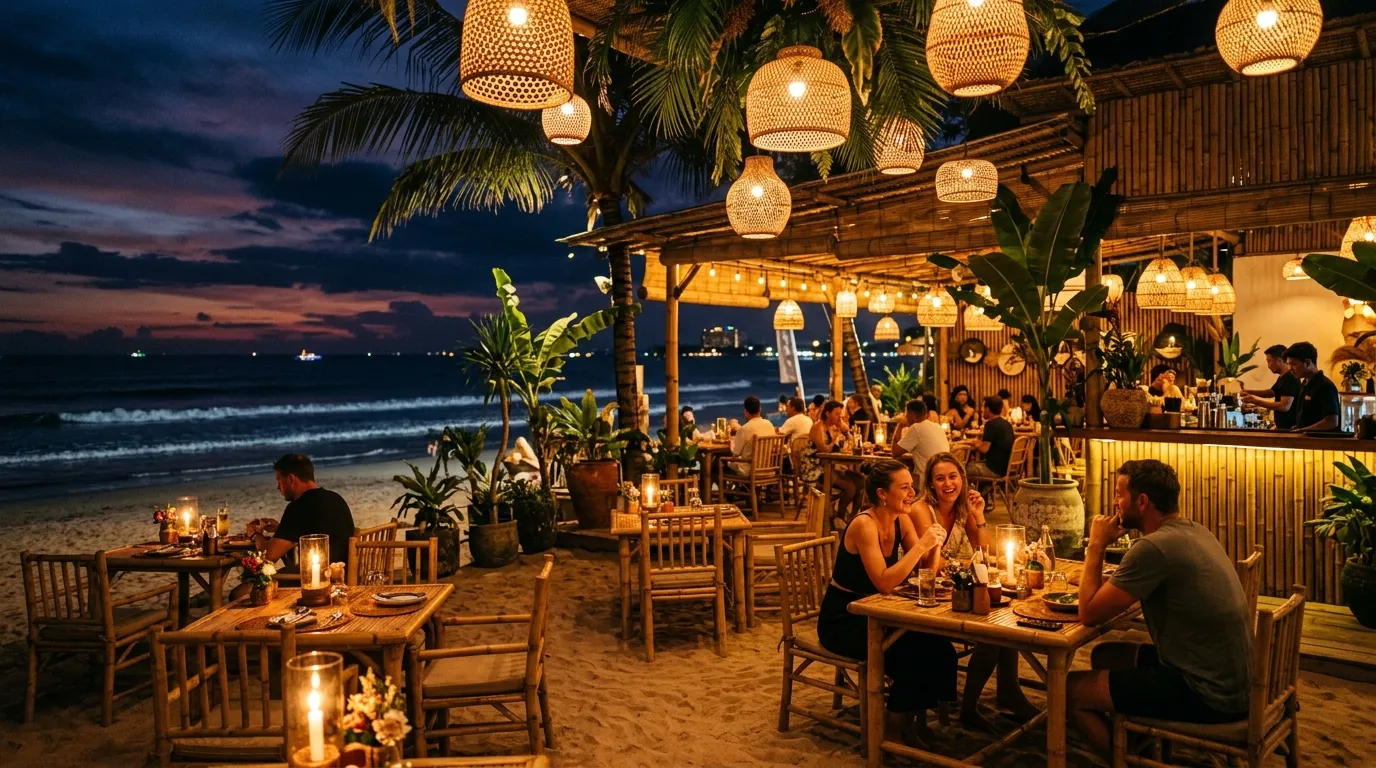
The mechanics vary from tourist to tourist but generally follow recognisable patterns:
- Beach and bar approach: Young men position themselves at beach bars, nightlife venues, and tourist-heavy public spaces in Kuta, Legian, and Seminyak. Initial interaction frames the encounter as casual romance, not a commercial offer.
- Companion model: The man offers to show the tourist around Bali, accompany her on activities, and spend time together. Accommodation in the tourist's villa or hotel is often implicit. Financial transfers are framed as gifts, contributions toward petrol or food, or support for family needs — not as payment for services.
- Villa-based arrangements: Some foreign women book private villas specifically to have a private space for these encounters, away from hotel staff observation. Online networks and social media have made pre-trip arrangements increasingly common, bypassing the beach and bar meeting stage entirely.
- Extended stays and emotional involvement: Unlike male sex tourism which tends toward shorter, more transactional encounters, female sex tourism in Bali more frequently involves extended emotional investment from the tourist. Some relationships develop over multiple trips, with ongoing financial remittances between visits.
Primary Locations
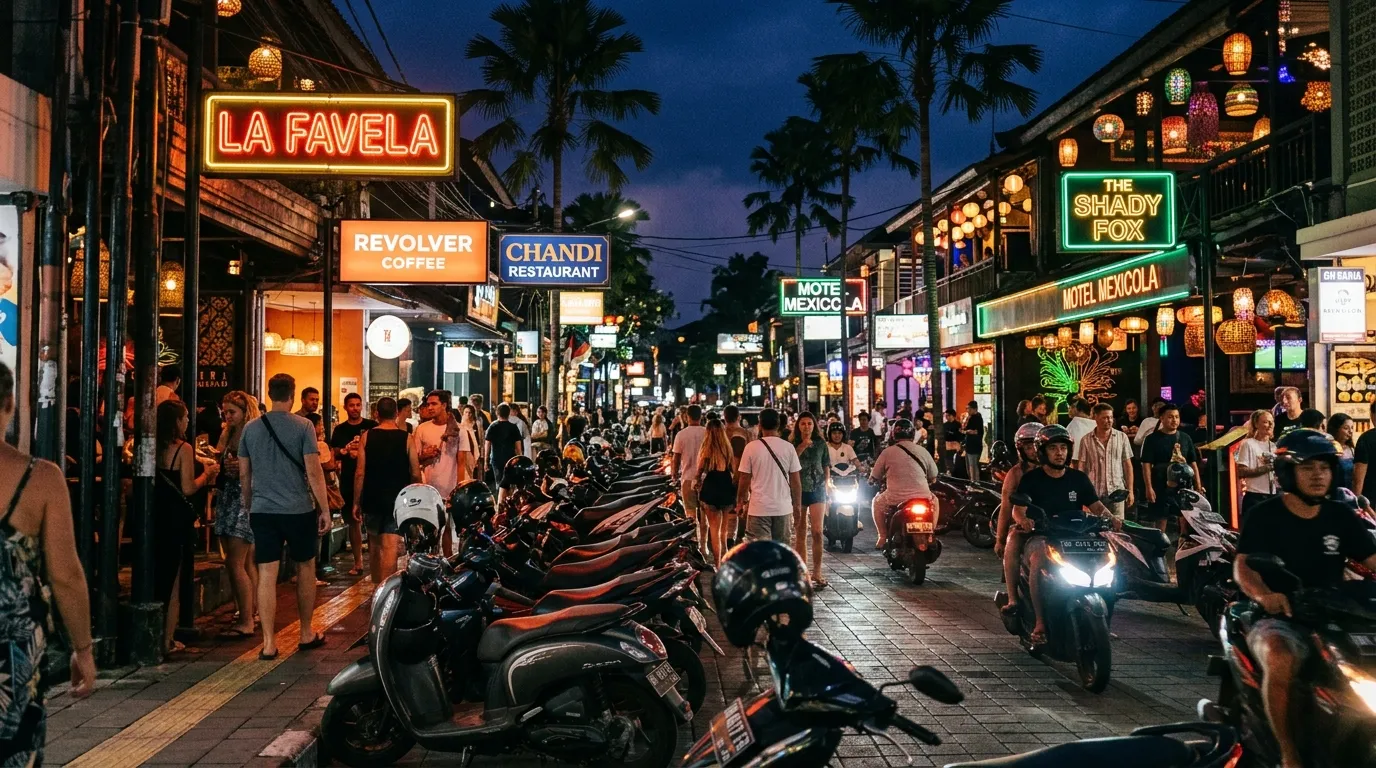
- Kuta Beach area — the original and still active hub; beach bars along Jl. Pantai Kuta and the Beachwalk mall promenade
- Legian and Double Six Beach — nightclub strip along Jl. Legian; Sky Garden and similar venues
- Seminyak — upscale bars and beach clubs attract a wealthier tourist demographic and a corresponding shift toward villa-based rather than beach-front arrangements
- Ubud — less common but present; yoga retreats and wellness tourism create a different demographic context, sometimes described as "spiritual romance tourism"
- Sanur and Canggu — growing as tourism demographics shift away from the Kuta party strip
Legal Exposure for Foreign Tourists
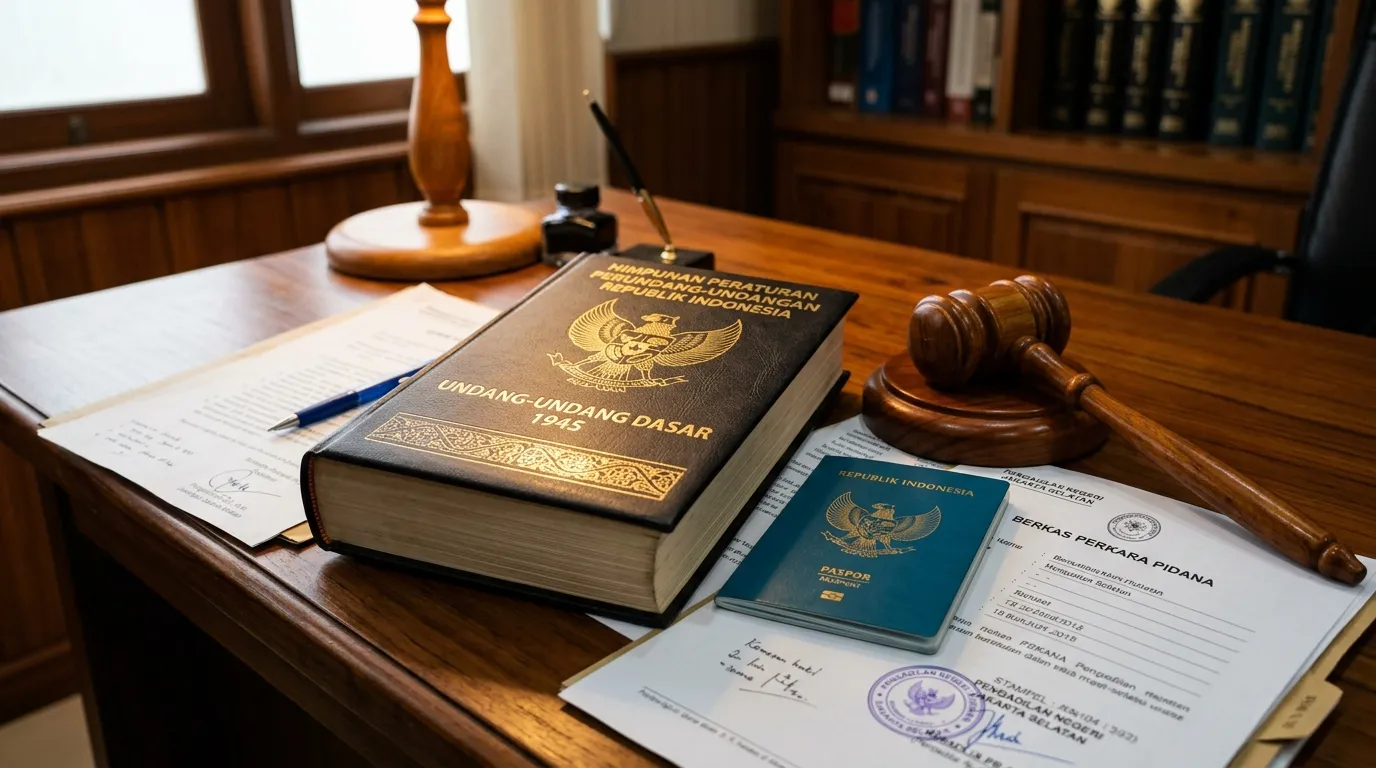
The legal situation is more complex — and more risky — than most tourists realise. Indonesia's legal framework does not cleanly distinguish between commercial sex work and private consensual adult relationships, and the definition of what constitutes a "commercial" arrangement is partly at police discretion.
Relevant Laws
- Indonesian Criminal Code (KUHP) Article 296: Criminalises facilitating or profiting from another person's sexual activities. Penalty: up to 1 year and 4 months imprisonment.
- KUHP Article 506: Criminalises living off the earnings of prostitution (pimping). Penalty: up to 1 year imprisonment.
- Law No. 44/2008 on Pornography: Broad provisions that have been applied to commercial sexual services in some jurisdictions. Penalty: up to 10 years imprisonment for commercial pornographic activities.
- 2026 KUHP revisions: Indonesia's revised Criminal Code (enacted 2026) includes provisions criminalising cohabitation by unmarried couples, which can be enforced against foreign tourists living with local partners — see our article on Bali romance and public decency laws for the full analysis.
- For a broader overview of Indonesian laws directly applicable to commercial adult services in tourist areas, read our guide on Bali prostitution laws for tourists.
The direct tourist risk: A foreign woman who transfers money, pays accommodation, or provides gifts in a context that police determine was for commercial sexual services can theoretically be prosecuted under KUHP Article 296 as a party to a commercial arrangement. In practice, prosecutions specifically targeting foreign female "clients" are rare — but detentions during raids and subsequent demands for informal payments to secure release are documented.
Immigration consequences are the more realistic risk: a police incident record can result in the Directorate General of Immigration being notified, triggering a visa review or early deportation without criminal prosecution.
Police Raids: What Has Happened
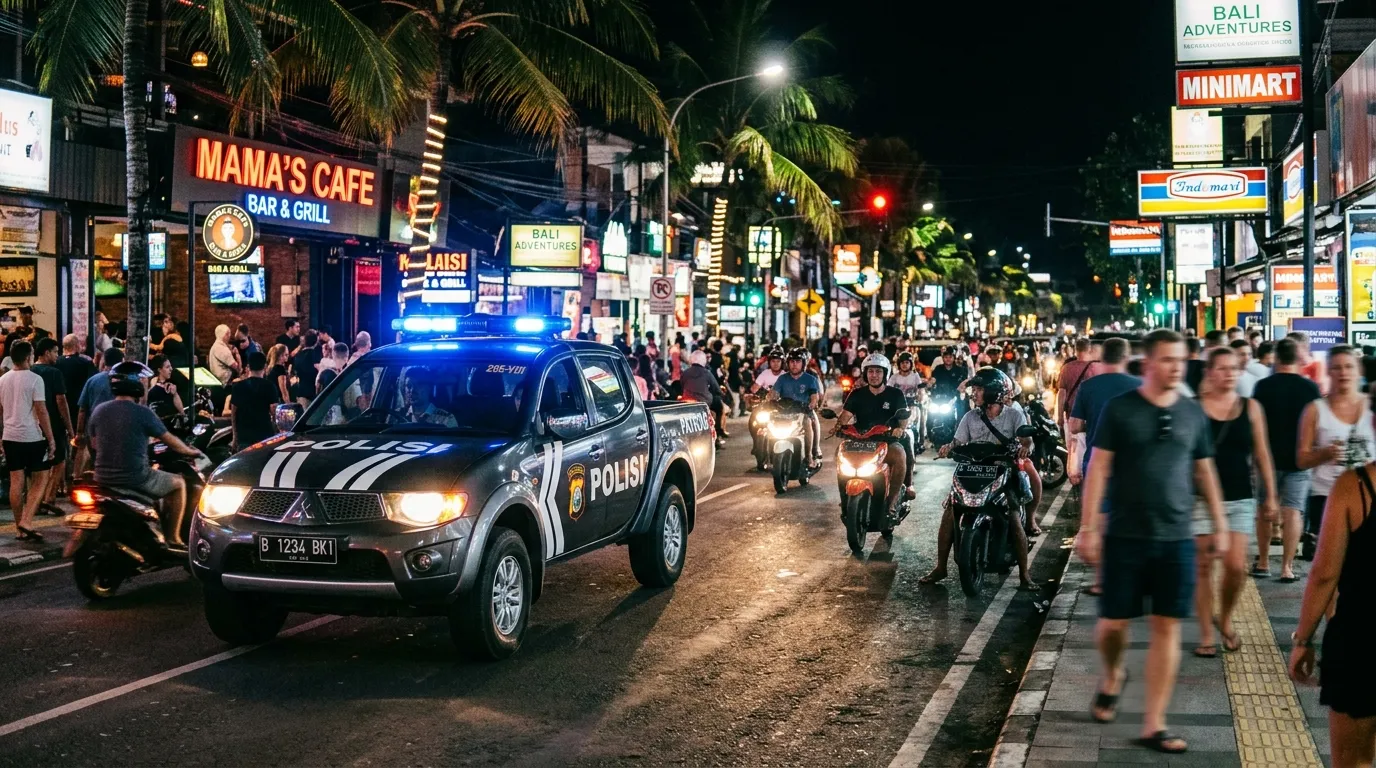
Bali police (Polresta Denpasar and Satpol PP, Bali's civil service police) conduct periodic raids on nightlife areas and commercial establishments suspected of facilitating prostitution. The Kuta area has been subject to multiple documented operations:
- Kuta Raids: Operations targeting beach-front establishments and nightclubs have resulted in detention of Kuta Cowboys, questioning of foreign women present, and confiscation of cash found on local men in circumstances suggesting commercial activity. The Bali Times has reported on multiple such operations.
- Post-pandemic intensification: Bali authorities intensified enforcement activity from 2023 onward, partly in response to international media coverage that was perceived as damaging to Bali's family tourism reputation.
- Villa raids: Private villas are not immune. Police have conducted operations on private rental villas following neighbourhood complaints, particularly in areas where villa tourism has expanded into residential communities.
Foreign women detained during raids are typically questioned and released without charge, but their passport details are recorded and forwarded to immigration. The experience itself — questioning at a police station through a language barrier, with potential overnight detention — represents a significant disruption and potential risk to personal safety.
Health Risks: HIV, STIs, and Condom Reality

The health risks in Bali's sex tourism context are real and underreported:
HIV
HIV prevalence among commercial sex workers in Indonesia (male and female) is significantly higher than in the general population. UNAIDS and Indonesian Ministry of Health data consistently show elevated rates among individuals engaged in sex work in tourist areas — Bali included. The exact prevalence among Kuta Cowboys as a specific group is not publicly reported, but the structural risk factors (multiple concurrent partners, inconsistent condom use, limited healthcare access) are all present.
STI Transmission Reality
The "romance tourism" framing — longer relationships, emotional connection, repeated contact — creates a specific condom compliance problem. Research on female sex tourism globally shows that women engaged in "romance" rather than transactional encounters are significantly less likely to use condoms consistently, because the relationship framing creates a false sense of mutual safety and trust. This pattern is documented across Jamaica, Gambia, and Indonesia.
PrEP and Testing Access
HIV PrEP (pre-exposure prophylaxis) is available in Bali at international clinics and some NGO health services. HIV testing is available at BIMC Hospital, SOS Medika, and Yayasan Kerti Praja (a Bali-based STI/HIV NGO). Testing before and after any unprotected encounter is the only rational approach. For health and safety data on Bali's risk environment beyond STIs, see our 2026 Bali safety overview.
Economic Dynamics and Exploitation
The economic disparity between Western tourists and young Balinese men creates an inherently complex power dynamic. Annual average income in Indonesia's village economy — where many Kuta Cowboys originate — may be USD 1,500–2,500 per year. A single generous tourist visit representing several months' equivalent income creates a dependency structure that researchers in this field describe as a form of structural coercion even when no direct force is involved.
The critical ethical question — one that tourism industry content consistently avoids — is: when economic disparity is extreme enough, can any arrangement be considered fully voluntary on the part of the economically disadvantaged party? This is the same question asked of male sex tourism in Thailand and Cambodia, and there is no clean answer. Advocacy organisations working on human trafficking note that economic coercion and physical coercion exist on a spectrum, and that focusing only on violent coercion misses the majority of exploitative situations in tourism contexts.
For the foreign woman: the arrangement may feel mutual, reciprocal, and genuinely romantic. For the Balinese man: the pressure of supporting family, the absence of alternative economic opportunity, and the social capital of the "cowboy" identity within his peer group all create motivations that are structurally more coercive than a freely chosen romantic encounter between economic equals.
Media Coverage and the Cowboys in Paradise Documentary

The 2010 documentary Cowboys in Paradise by Indonesian director Amit Virmani brought the Kuta Cowboys phenomenon to international media attention. The film featured Balinese men discussing their relationships with foreign women openly, and sparked significant controversy in Indonesia — particularly among Balinese Hindu community leaders and government officials who objected to the portrayal of Balinese men in transactional relationships with foreign women as damaging to the island's cultural reputation.
The documentary led to a temporary intensification of police activity in Kuta. The men featured in the film reportedly faced social consequences within their communities. The documentary is available on streaming platforms and provides first-person context that no travel guide can replicate.
Time magazine published a long-form piece on the phenomenon ("The Cowboys of Bali," 2010) that examined the economic and social drivers in depth. The coverage generated diplomatic friction between Indonesia and Western media organisations, contributing to the topic's subsequent disappearance from mainstream travel content.
Why Travel Guides Don't Cover This

The near-total absence of this topic from mainstream Bali travel content — Lonely Planet, TripAdvisor, travel blogs, hotel booking platforms — is not accidental. Several structural forces suppress it:
- Tourism industry financial interests: Bali's USD 10+ billion tourism sector depends on the perception of Bali as a safe, spiritually enriching, family-appropriate destination. Content that complicates this narrative is commercially disadvantageous for every stakeholder in the industry chain.
- Indonesian government sensitivity: Bali's government (and national government) actively objects to international media framing the island in terms of sex tourism. The Cowboys in Paradise controversy demonstrated the pressure applied to journalists who cover the subject.
- Advertiser concerns: Travel media is heavily dependent on advertising from hotels, airlines, and tourism boards. Content that risks advertiser withdrawal is filtered through editorial decisions.
- Reader preference: Many tourists prefer travel content that confirms the destination they have chosen is a good choice. Content that introduces legal, health, or ethical complexity performs worse by standard engagement metrics than aspirational content.
The result is that tens of thousands of women arrive in Bali each year without any awareness of the legal, health, or ethical dimensions of the situation they may encounter — because the information exists nowhere in the content they consumed before travel. This guide is one attempt to address that gap.
For further reading: UNAIDS Indonesia Country Report (HIV and STI prevalence data); WHO STI fact sheet. See also our related guides on Bali romance and public decency laws and LGBTQ safety in Bali 2026.
Frequently Asked Questions
Who are the "Kuta Cowboys" in Bali and how does this dynamic operate?
"Kuta Cowboys" refers to local beach boys, surf instructors, and club promoters along Kuta, Legian, and Seminyak beaches who form romantic or casual relationships with visiting foreign women, often characterized by lifestyle sponsorship, gifts, and financial support.
What are the primary financial scam risks associated with holiday romance in Bali?
A documented pattern involves whirlwind holiday romance followed by persistent remote financial requests after the tourist returns home, citing fabricated family medical emergencies, motorbike accidents, or bogus land investments.
What are the health and STI transmission risks associated with casual encounters in Bali?
Studies document low consistent condom use and high rates of sexually transmitted infections, including HIV, among commercial beach workers with multiple rotating international partners. Practicing strict barrier contraception is essential.
Does Indonesian criminal law penalize extramarital sex for foreign tourists?
Under Indonesia's 2022 Criminal Code (KUHP), extramarital sex is strictly an absolute complaint offense (delik aduan). Prosecution can only occur if an official police report is lodged by an immediate family member (spouse, parent, or child). Police do not conduct hotel raids on tourists.
What documentary brought global media attention to female sex tourism in Bali?
Amit Virmani's 2010 documentary film "Cowboys in Paradise" brought widespread international attention to the subculture of beach romances, sparking local government investigations and police sweeps along southern Bali beaches.
Explore Bali Authentically — With a Licensed Local Guide
Our carefully designed tour packages show you the real Bali — temples, traditions, and breathtaking landscapes — with a professional licensed driver and guide who knows the island. No nightlife risks, no legal grey areas. Just the best of Bali.
View Romantic Bali Tour →